Introduction | A Quiet but Costly Problem in Orchards and Vineyards
Rodents in commercial agriculture are often seen as a background issue compared to insect pests, yet their impact on fruit and nut crops can be significant. Unlike more visible pests, rodents tend to cause damage quietly, working within tree canopies or along orchard edges where activity can go unnoticed for weeks. By the time feeding damage is obvious, yield losses may already be locked in.
Rodents like squirrels and roof rats account for millions of dollars in annual crop losses nationwide. In fruit and nut production, much of this damage occurs before harvest, directly affecting marketable yield rather than stored inventory.
Pre-harvest rodent pressure presents a unique challenge. Feeding often happens sporadically and unevenly, making it difficult to assess the true scope of the problem. As a result, rodents in commercial agriculture frequently remain under managed until losses become impossible to ignore.
Why Rodents Are a Growing Concern in Fruit and Nut Production
Rodent pressure in fruit and nut systems has increased over time due to several factors.
Expanded orchard acreage has created larger, more continuous habitats that support stable rodent populations. At the same time, reduced predator presence in some agricultural regions has shifted natural population controls. Climate variability has also played a role, with milder winters and longer growing seasons supporting higher survival and more frequent breeding cycles.
Rodents differ from insect pests in ways that complicate management. Their movement patterns are less predictable, and they are highly adaptable, quickly learning and adjusting to control measures. Damage from rodents does not always follow thresholds that growers rely on to know when action is needed. Feeding may occur in clusters or migrate across blocks, which means visible damage often appears only after meaningful yield loss has already occurred.
Primary Rodent Pests Impacting Fruit and Nut Crops
Several rodent species affect fruit and nut crop operations, but two stand out for their consistent and costly impact before harvest.
Squirrels
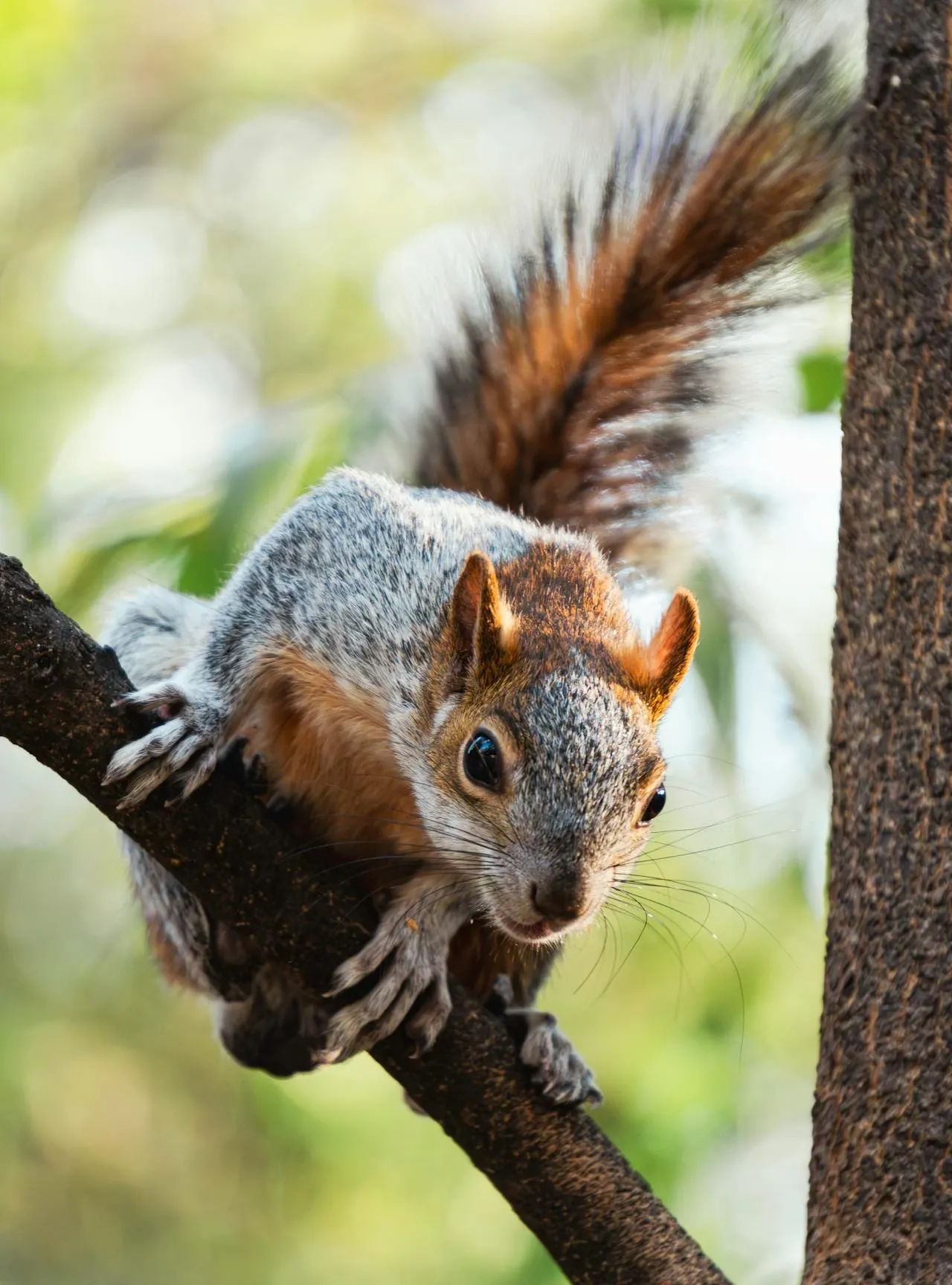
Squirrels are highly mobile and adaptable, making them especially problematic in nut producing orchards. Tree squirrels are adept climbers and often remove nuts before maturity, reducing yield well before harvest begins. Partial feeding and shell damage can render nuts unmarketable even when kernels are not fully consumed.
Ground squirrels present a different but equally damaging challenge. While they do not climb, they feed on young plant material, girdle trees by pulling and chewing tender bark, and damage irrigation lines through gnawing activity. Their burrowing behavior can also compromise levees and embankments, increasing stress on orchard systems during the growing season.
Tree to tree and ground level feeding patterns complicate detection, as damage may appear scattered rather than concentrated. Squirrels are most commonly associated with losses in almonds, walnuts, and pecans, where early season feeding and tree stress directly affect final harvest volume.
Roof Rats
Roof rats are agile climbers that frequently nest within dense canopies. Their feeding behavior includes gnawing on bark and girdling branches, which can stress trees and reduce productivity beyond the current season. They also feed on developing fruit and nuts, often hollowing the fruit, making it difficult to detect from the ground.
Damage from roof rats is common in citrus, avocados, stone fruit, and nut orchards with dense canopy structure. Because their activity often occurs above eye level, infestations may go unnoticed until damage becomes widespread.
Other Rodents
Field mice, voles, and gophers can also affect orchard systems, but their impact is often more localized or focused below ground via root damage which prevents water absorption and reduces structural stability of the tree. This root damage can also create pathways for pathogens to enter. In fruit and nut agriculture, squirrels and roof rats remain the primary contributors to pre-harvest losses of established trees due to their feeding habits and canopy level activity, while burrowing rodents are typically more of a threat to young trees.
How Rodents Damage Crops Before Harvest
Economic and Agronomic Impacts
Rodents in commercial agriculture cause direct yield loss through feeding on fruit and nuts before harvest. Even limited feeding can reduce the number of marketable units, particularly in crops graded by size and quality.
Beyond immediate yield loss, rodent activity can stress trees and reduce long term productivity. Bark damage, branch girdling, and damaged roots interfere with nutrient flow, while feeding wounds can increase susceptibility to secondary pests and disease.
Damage is rarely uniform across a block of crops. This uneven distribution complicates yield estimates and makes it harder for growers to connect observed losses to rodent activity until the season is already underway. More uniform monitoring capabilities across an orchard or vineyard would allow growers to identify patchy activity earlier, before localized damage expands into broader yield loss.
Rodents as Disease Vectors in Agricultural Environments
Rodents are known carriers of a range of pathogens that affect agricultural environments in different ways. In crop systems, rodents often contribute to disease risk indirectly by creating feeding wounds and soil disturbance that allow existing pathogens to enter plants. For humans and animals, rodents can act as direct disease vectors through contact with urine, feces, or contaminated surfaces, adding risk beyond crop damage alone.
Rodent activity can impact crop health by increasing disease susceptibility rather than by directly transmitting plant pathogens. Feeding wounds and bark damage create entry points that allow existing soilborne or environmental pathogens to infect plant tissue. There are also risks to farm workers who may come into contact with contaminated surfaces or nesting areas. In operations that include livestock nearby, rodents can act as a bridge between crop and animal health concerns.
Even when feeding damage appears limited, rodent activity can elevate disease risk by injuring roots and redistributing soil within an orchard or vineyard. This movement can expose healthy plants to soilborne pathogens such as Phytophthora spp., Pythium spp., Rhizoctonia spp., and Fusarium spp., increasing the overall threat profile for fruit and nut operations.
Why Managing Rodent Populations Is Essential in Fruit and Nut Crops
Reactive rodent management often costs more and delivers fewer results than early intervention. Once damage becomes visible, populations may already be established and harder to control.
Traditional control methods rely heavily on visual scouting, which has clear limitations in orchard environments. Canopy level activity and nighttime feeding reduce the effectiveness of ground based observation. Delayed detection often leads to delayed response, increasing both crop loss and management costs.
Data-driven monitoring of rodent activity and presence is becoming increasingly important in commercial agriculture settings, especially as rodenticides face new regulatory scrutiny and restrictions. Understanding when and where rodents are active allows growers to make more informed decisions and act before damage escalates.
The Role of Monitoring in Managing Rodents in Commercial Agriculture
Monitoring plays a critical role in identifying rodent pressure before visible damage occurs. Unlike insects, rodents are larger, mobile, and less consistent in their activity patterns, which requires different monitoring approaches.
Early detection supports targeted control strategies rather than broad responses. This can reduce unnecessary chemical use while improving effectiveness and preventing the development of rodenticide resistance. Better visibility into rodent activity also improves decision making by aligning management actions with actual risk rather than assumptions.
As regulatory pressure increases and sustainability goals evolve, monitoring is becoming a foundational component of rodent management programs.
Frequently Asked Questions About Rodents in Commercial Agriculture
- Which rodents cause the most damage in fruit and nut orchards?
Squirrels and roof rats are responsible for the majority of pre-harvest damage due to their feeding habits and ability to access tree canopies. - How can farmers tell if rodent damage is happening before harvest?
Indicators include partially eaten fruit or nuts, bark damage, and irregular yield loss. Traditional scouting often misses early activity due to canopy level feeding. - Why is rodent damage often underestimated in orchards?
Sporadic feeding and uneven distribution make losses difficult to quantify until damage becomes widespread. - Are rodents a food safety risk in orchards and vineyards?
Yes. Rodents act as disease vectors and can mechanically introduce pathogens that affect crops and worker safety. - How does rodent pressure change throughout the growing season?
Activity often increases as fruit and nuts develop, with seasonal shifts influenced by food availability and breeding cycles. - Why is rodent monitoring becoming more important now?
Regulatory changes, sustainability goals, rodenticide resistance prevention, and rising economic pressure are pushing farmers toward earlier and more precise management approaches.
The Takeaway | Managing Rodents in Commercial Agriculture
Rodents in commercial agriculture represent a serious and often underestimated threat to fruit and nut crops. Their damage rarely announces itself early, particularly as populations can increase rapidly under favorable conditions. Yield loss, long term tree health, and human health risks all intersect where rodent activity goes unseen.
Monitoring is no longer a secondary consideration. It is becoming a central tool in protecting orchard and vineyard systems. As technology evolves, visibility into rodent activity will play a growing role in helping growers protect what they cultivate long before harvest begins.